Hyejeong Kim

“I intend to make contemporary ceramics based on my cultural tradition. It is a creative journey with stimulation and contemplation that never allows me to escape from who I am.”
Hyejeong Kim's distinguished career is anchored by prestigious international recognition as a finalist of Lexus Creative Masters 2024, Loewe Crafts Prize 2020, and the Korea Ministry of Culture Craft Prize 2022 winner.
Her work is permanently collected by major institutions, including the Art Institute of Chicago, the Philadelphia Museum of Art, the Seoul Museum of Craft Art, and the Tokyo University of the Arts Museum.
Kim's exhibition trajectory spans from celebrated early shows at London's Crafts Council, Somerset House (2006) to mature recent works like "Palpable Moments" (2023), while her collaborative projects with ChinJuKan Pottery in Japan demonstrates unique position bridging East Asian ceramics traditions with contemporary British influences.
-
 Embrasse
 -
Aspects
-
Noblesse
-
Swirl


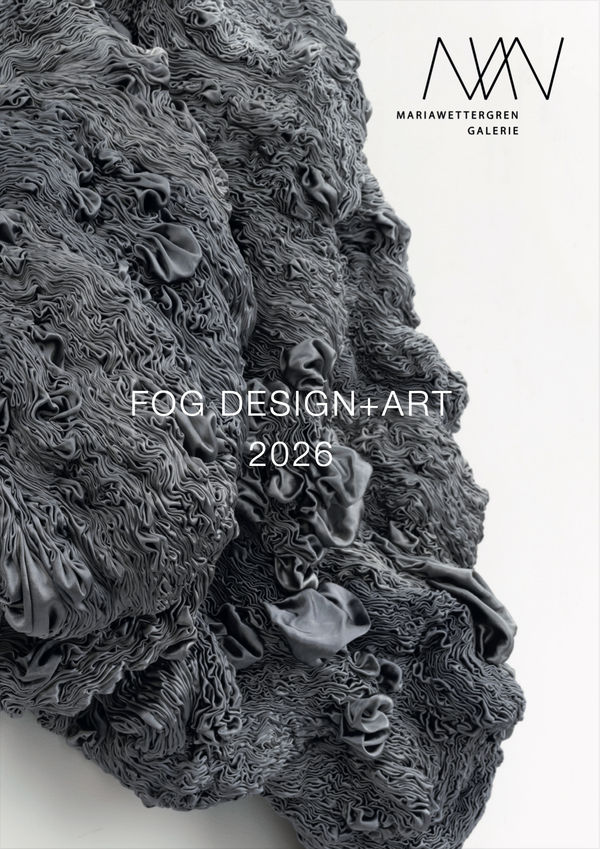
Hyejeong Kim's work develops from long-standing ceramic traditions while maintaining a precise and individual language. Born in Japan to a Korean family, she works with forms that do not depict history, but carry its weight through the delicacy of the structure.
During a period spent in the UK, European ceramic practices entered into quiet exchange with the Korean methods she had studied since her early years. Over time, Hyejeong Kim's work detached from fixed typologies, favouring forms that emerge through process rather than follow a set model.
A shift occurred after the 2011 tsunami in Japan. In the years that followed, Kim's work began to reflect change. While lines loosened and surfaces opened, boundaries became less determined. The vases welcomed nature inspired shapes, formed by lines like waves, bearing the traces of destruction. They remind us however of delicate vegetal arabesques.
Wheel-throwing remains Kim's primary method. The wheel imposes limits, but within those limits, only touch guides the evolution of the form. The clay spins outward from a single point, gently shapedthrough repeated gestures that allow subtle shifts and balances to emerge. The resulting vessels are then ready to face time by themselves, discovering the pale radiance of platina. Kim's practice is steady and deliberate. She exhibits internationally and teaches with attention to form as a way of thinking. Restraint is not a rule in Hyenjeong Kim's work, but a condition for precision, allowing the essential qualities of each piece to come forward undisturbed.